News Desk/Reuters
Tehran: Iran widened its military response on Wednesday after US forces carried out strikes near the Strait of Hormuz, targeting American military installations in Jordan and several Gulf states, according to Iranian state media and regional officials.
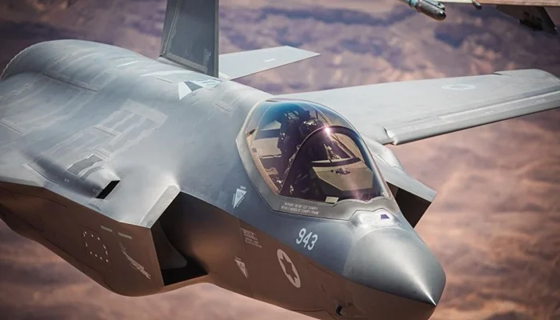
Iran’s Revolutionary Guards said they attacked the US al-Azraq air base in Jordan with long-range missiles, claiming the operation struck F-35 fighter jet hangars and a command-and-control center.
The Guards also announced drone attacks on the US Fifth Fleet headquarters in Bahrain and the Ali Al Salem base in Kuwait, warning Washington of “more severe responses” if further strikes continue.
Jordan’s armed forces said five Iranian missiles aimed at al-Azraq were intercepted before reaching their targets. Officials confirmed debris landed inside Jordanian territory but reported no casualties or major damage.
In Kuwait, the military said air defense systems engaged hostile aerial targets shortly after Tehran claimed responsibility for drone operations against the Ali Al Salem base. Bahrain also activated emergency sirens, with officials later stating that Iranian attacks had been repelled.
A US official, speaking anonymously, said preliminary assessments showed that nearly all Iranian missiles and drones had been intercepted, with no immediate reports of injuries to American personnel or damage to military facilities.
The escalation followed a series of American strikes near the Strait of Hormuz late Tuesday. US Central Command said operations concluded after roughly four hours, while a US official said nearly 20 Iranian targets were hit during the campaign.
Iranian media reported attacks on Qeshm Island and the port city of Sirik along the Strait of Hormuz. Explosions were also heard near Bandar Abbas and Jask, close to the strategic entrance of the waterway.
The latest confrontation marks one of the most serious military exchanges since Iran and the United States agreed to a ceasefire in April following the war that erupted on February 28 with joint US-Israeli strikes on Iranian territory.
President Donald Trump defended the renewed military action, saying the American response needed to be “very strong” and “very powerful.” However, the growing violence has further complicated already fragile diplomatic efforts aimed at ending the conflict.
Meanwhile, a separate incident involving a US Apache helicopter added to tensions in the region. A US official said the helicopter was brought down Tuesday by an Iranian one-way attack drone near the coast of Oman. Both pilots survived and were rescued by a US Navy surface drone after spending about two hours in the water.
Trump later downplayed the incident in comments to The Wall Street Journal, calling it “not a big deal” and insisting the crew was safe.
Iranian Foreign Minister Abbas Araghchi indirectly referenced the incident on social media, warning that foreign military forces operating in the region risk becoming entangled in “accidents or crossfire” and suggesting the safest solution would be for them to leave.
Despite ongoing hostilities, Tehran denied conducting offensive naval operations in the Strait of Hormuz over the previous 24 hours. Still, restrictions on shipping through the critical waterway remain largely in place, while Washington continues to enforce sanctions and blockades targeting Iranian ports.
The Strait of Hormuz previously handled nearly one-fifth of the world’s oil and liquefied natural gas supplies, making the conflict a growing concern for global energy markets. Oil prices rose about 1 per cent in early Asian trading following the latest escalation.
US Energy Secretary Chris Wright said shipping activity through Hormuz was gradually improving but warned it could take months for energy flows to return to normal once the conflict ends.
Washington continues to insist that any future agreement must prevent Iran from developing nuclear weapons, a charge Tehran denies. Iran, meanwhile, is demanding sanctions relief, access to frozen financial assets, and international recognition of its authority over the Strait of Hormuz.